
Written by: Senior QA Engineer
Mykhailo RalduhinPosted: 17.09.2026
12 min read
In the healthcare domain, it's crucial to keep up with ever-changing regulations and new technical achievements. If you are stuck with a legacy solution, you quickly find yourself behind competitors. Therefore, modernization, along with AI and compliance, is among the top priorities for health tech leaders in 2025.
Modernization ensures efficiency, interoperability, safety, and an outstanding user experience. But it's also quite challenging: while making things better than before, you have to keep the vital systems running, avoiding complications. Downtime is unacceptable, which makes quality assurance a must. However, QA in healthcare modernization is far from simple, especially if you're new to it.
With plenty of expertise in healthcare application testing, the DeviQA team is excited to shed light on the major QA challenges in modernizing health tech products and advise on how to solve them efficiently.
Healthcare QA expertise you can build on
What healthcare system modernization actually means
Before talking about testing aspects, we'd like to clear up the meaning of modernization. Compared to usual updates, it's like a revolution. Speaking in the language of car users, updating is like installing a cup holder in your car, while modernization is replacing its engine while driving (a mission up to Tom Cruise only). In other words, it's rebuilding or migrating core systems to newer architectures, frameworks, and infrastructures.
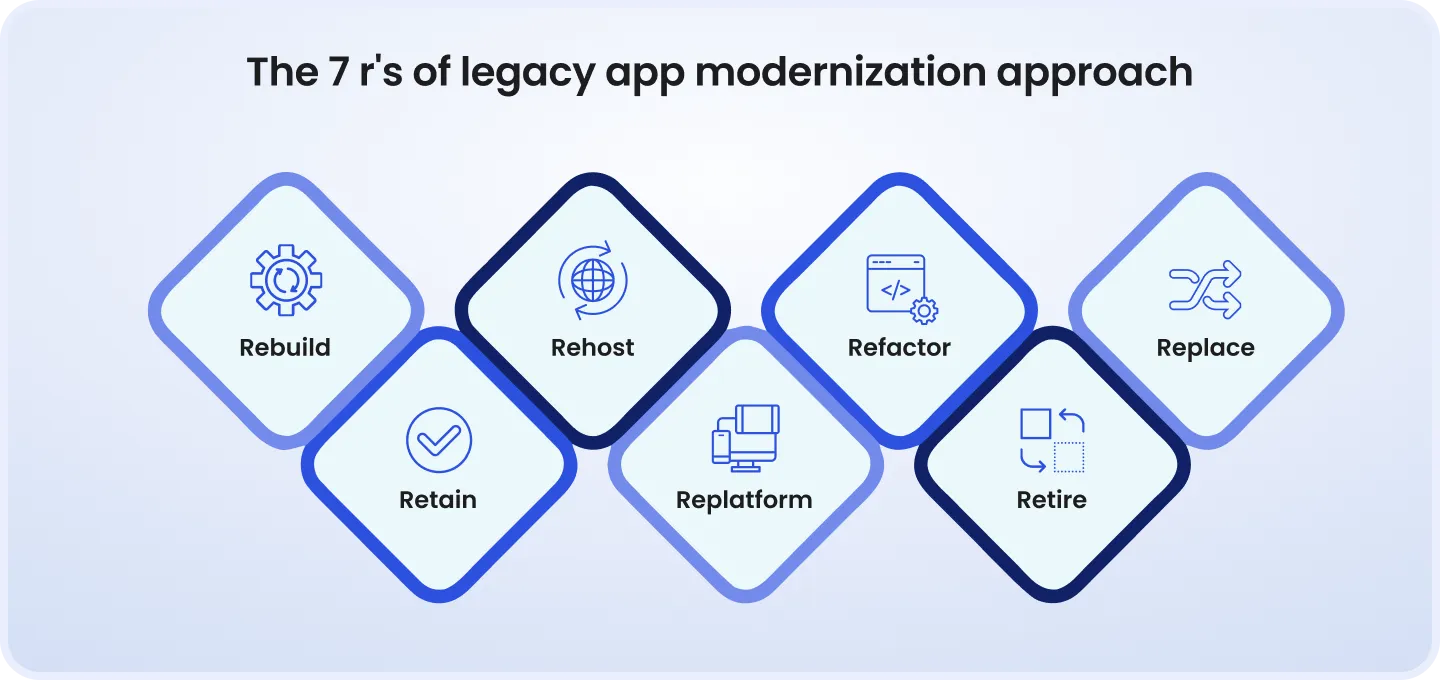
Source: Radixweb
How exactly can healthcare solutions be modernized? Here are some common scenarios:
Re-developing an app using cutting-edge frameworks and new programming languages, while preserving the business logic.
Moving from on-premises servers to a hybrid or multi-cloud environment to gain flexibility and cut expenses. 85% of healthcare solutions use at least two cloud providers.
Updating UI/UX to meet modern design standards and boost user-friendliness.
Replacing outdated monolithic architecture with microservices.
Adopting FHIR-based APIs instead of HL7 v2 for interoperability.
While modernization demands extensive rework, it also brings businesses tangible benefits. We'd like to list the most prominent ones:
Product reliability
Security and compliance
Lower technical debt
Code maintainability
Easy integrations
Happier users
Competitive advantage
Lower maintenance costs
Modernization offers indeed a lot of rewards, but getting them without breaking something critical along the way isn't possible without a proper QA approach.
The value of QA in software modernization
Healthcare software modernization should do more than modify some things — it should bring real improvement. In fact, 79% of respondents in a survey published on Integration Developer News said they'd had at least one app modernization effort fail. It's not surprising, because great changes that come with modernization can shake up both software work and business operations. That's why a well-thought-out testing strategy must be in place to keep things steady and make sure the transformation is seamless, secure, scalable, and in line with set objectives.
QA in healthcare software modernization usually includes:
Test automation to execute checks quickly and reliably.
Efficient test data management to cover all scenarios while not exposing PHI.
Execution of functional and non-functional tests (e.g., performance, security, interoperability, accessibility, and compliance tests) to evaluate all aspects of software operation.
Data migration testing to ensure precision, completeness, and usability of data in the new system.
Continuous testing so teams get quick feedback on every update.
Keeping testing documentation up-to-date to streamline audits and prove compliance.
Risk management to tackle issues before they turn into real trouble in production.
With a proper QA process, teams get quick feedback, keep modernization under control, and avoid downtime.
QA challenges when modernizing healthcare software
Testing healthcare software, whether it's a startup or a modernized system, is a great responsibility. Superior skills in quality assurance, as well as domain knowledge, are needed to do the job right and handle all the pitfalls down the road. By the way, QA engineers face quite a lot of them as systems are modernized.
Challenge 1: Keeping patient data intact during migration
About 83% of data migration projects either fail or go over budgets and schedules. Indeed, moving thousands and thousands of medical records from one system to another is a great challenge. Inaccuracy of transferred data is a nightmare for a team because the consequences are horrible: inefficiency, unreliability, compliance issues, etc. QA teams must validate every record and check data mappings to ensure nothing gets lost during migration.
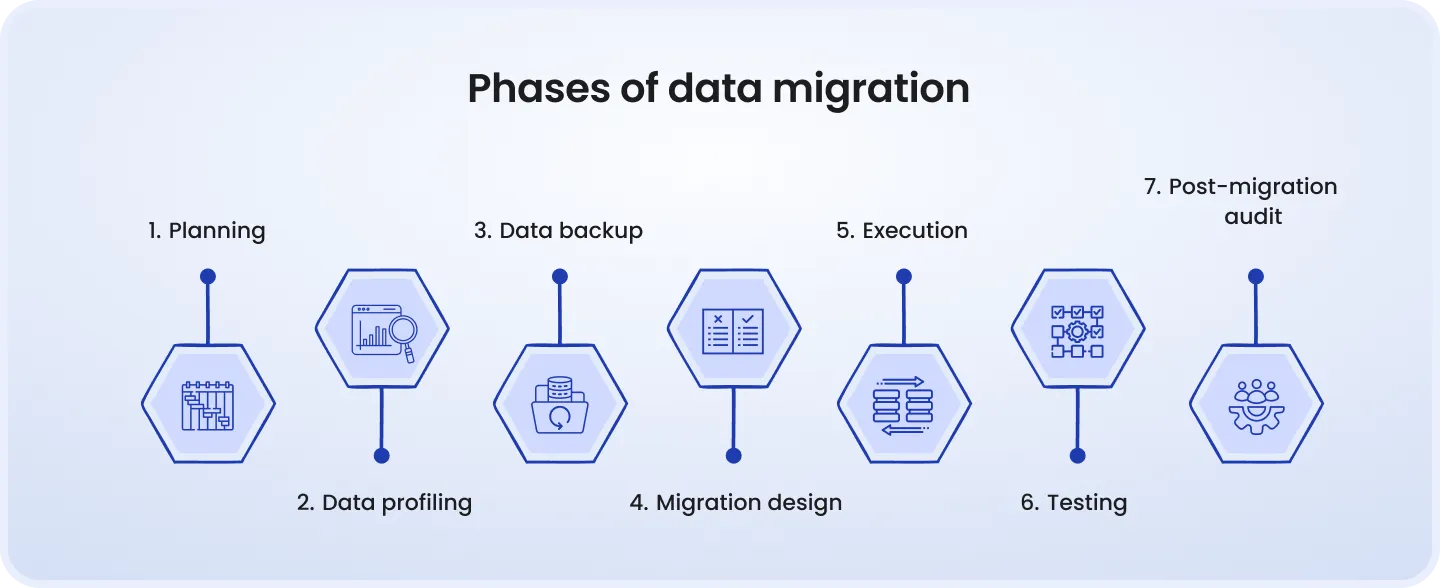
Source: Alexsoft
Risks you face:
Lost or partially transferred data
Duplicated or corrupted data
Data with incorrect semantic meaning
Data integrity can literally be a matter of life and death. Thereby, all related risks should be defined and addressed early on.
How we address this at DeviQA:
Being perfectly aware of the criticality of data integrity, our QA experts always carefully check and double-check everything. Here are the key practices used to complete this task:
Reconciliation testing carried out to compare record counts and field-level hashes before and after migration.
Semantic validation that suggests the engagement of clinicians to prove that data hasn't changed its semantic meaning after migration.
Rollback tests that mirror migration failures to let the team understand if data can successfully and safely revert.
Automated tests that check for anomalies in data.
A whole variety of tests is executed to ensure data integrity, with every field and every record arriving in its original state.
Challenge 2: Ensuring regulatory compliance
Regulatory compliance is a hallmark of healthcare apps, though many would rather call it a curse. The Healthcare Digital Services Quadrant Report defines regulatory compliance as one of the top transformation challenges. While it's essential for smooth business operation and patient safety, it definitely adds hassle. Modernization, which often changes how healthcare data moves around, gives compliance issues a chance to sneak in.
Risks you face:
Changing app architecture or switching to cloud environments may impact:
Audit logs (who, what, when, and how accessed)
Encryption standards (especially during cloud migrations)
Access control mechanisms (RBAC, SSO, MFA)
Data residency (which is a big deal for regulations).
How we address this at DeviQA:
Software testing in the healthcare domain is always associated with comprehensive compliance evaluation. In order to spot possible compliance problems early, our team conducts security and privacy checks throughout the development process.
Our key techniques:
Shift-left compliance testing, i.e., integrating compliance tests into development and testing processes as early as possible.
Automated policy checks that scan infrastructure-as-code for violations.
Privacy tests mimicking real-world scenarios, like making sure that a nurse can access only the records of her department.
Penetration testing carried out before and after the process of migration.
Connecting every test case to a compliance requirement to facilitate traceability that regulators love so much.
Challenge 3: Interoperability of old and new modules
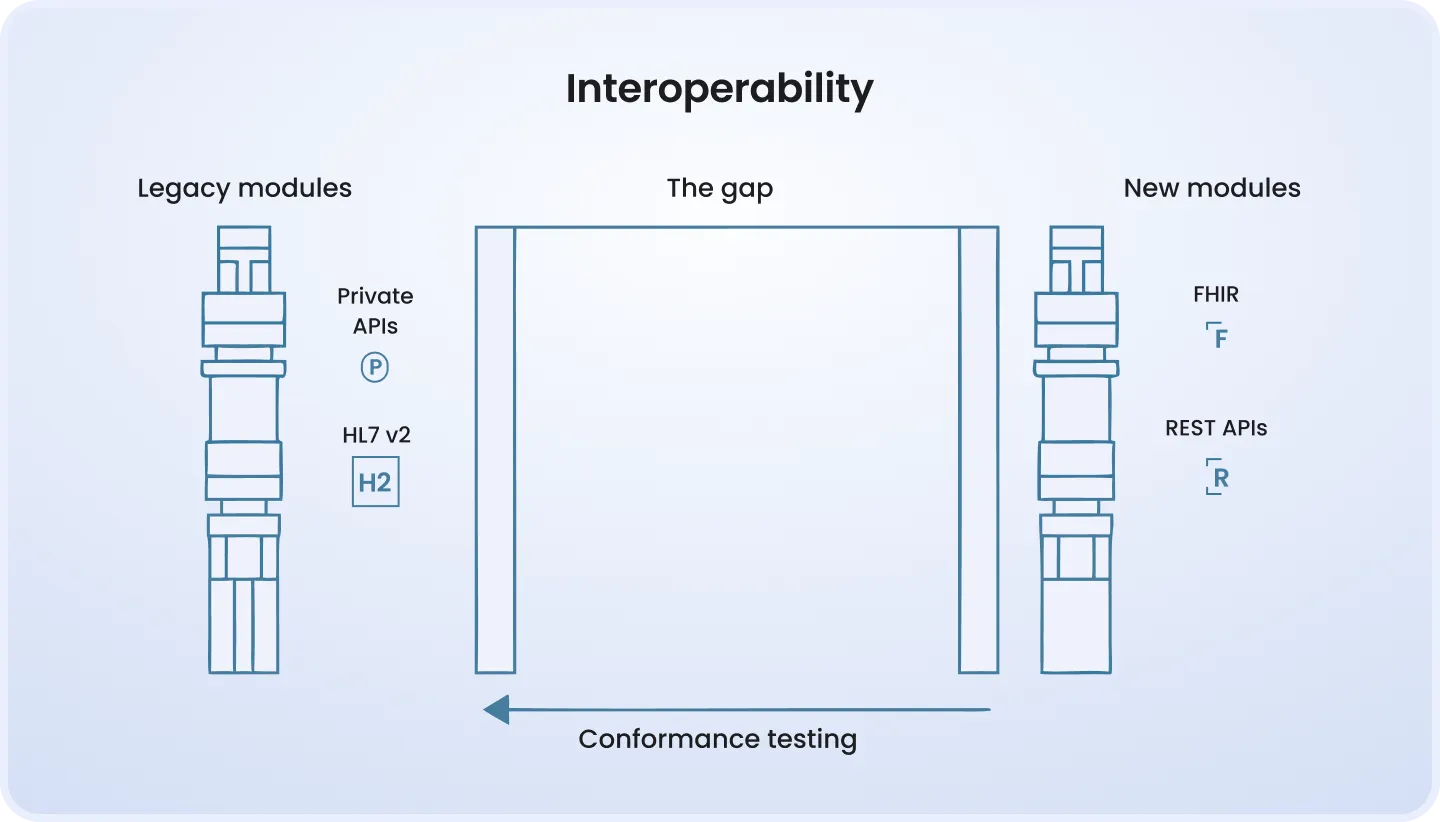
The modernization of healthcare systems is never quick. So, old and new modules may work together for years as the system is undergoing modernization. We've seen this a lot in our practice. The problem is that those modules don't always 'speak' the same language. Old ones may still use private APIs and HL7 v2, while new ones have already shifted to FHIR or REST APIs.
The International Journal for Multidisciplinary Research says that achieving complete interoperability is a major technical challenge for healthcare systems, with 72% of companies admitting they need help integrating older systems with new infrastructure.
Risks you face:
Because of the difference in data exchange standards, you may run into the following issues:
Versioning issues
Workflow disruptions
How we address this at DeviQA:
To prevent interoperability problems, make sure your test plan includes the following things:
End-to-end message flow testing between integrated systems.
Negative testing, i.e., providing incomplete or incorrect data to check the response of the system.
Conformance tests that validate all APIs against HL7/FHIR specs.
Backward compatibility checks for older systems.
Mock services for emulating external systems whenever they aren't accessible.
Decent interoperability testing ensures that throughout modernization, old and new modules don't clash but seamlessly communicate.
Challenge 4: Security risks in the cloud
Migration to the cloud makes healthcare apps more scalable, which is really great, but, along with this, it takes away direct control, raising serious security concerns. In fact, 78% of organizations point to security concerns as the main barrier to full cloud adoption.
Risks you face:
Cloud environments come with certain risks:
Misconfigured buckets revealing PHI
Poor IAM policies
Unencrypted backups
Unsanctioned integrations
As long as healthcare data costs really a lot on the darknet, any slip-up in data protection is just a gift for cybercriminals. Don't leave a loophole for them!
How we address this at DeviQA:
One of the primary duties of a QA team is ensuring solid data protection. This may include the following:
Scanning each new cloud element for vulnerabilities.
Checking encryption protocols to make sure data is properly protected.
Running pen tests to check if the system can withstand real attacks.
Verifying IAM roles to confirm that every user has only the access they require.
Security testing in healthcare modernization isn't just a requirement for regulatory compliance — it's an ethical obligation whenever PHI is concerned.
Challenge 5: Performance and downtime risks
Modernization often implies changing the system's backbone, which can affect performance and uptime. Healthcare solutions, though, cannot afford downtime, as slow responses or system outages can literally endanger lives. Yet, research shows that healthcare organizations that use legacy systems have about 32 hours of downtime a year due to system failures and maintenance requirements.
Risks you face:
Long response times
Low database performance
Unstable concurrency handling
System crashes during go-live
Performance issues should be tackled immediately because in healthcare, 24/7 availability is a must.
How we address this at DeviQA:
We take performance testing seriously and come up with the following initiatives:
Load testing with realistic workloads.
Stress testing to find breaking points early.
Failover testing simulating server crashes or network outages.
Phased rollouts, i.e., starting with low-risk modules.
Continuous monitoring to track performance post-launch.
When it comes to system performance, it's always better to take the time to double-check everything than to rush and deal with problems later in production.
Challenge 6: Adapting test automation
It's quite common for modernization to break an existing automation solution, especially when a healthcare system evolves from a monolith to a microservices architecture.
Risks you face:
Existing scripts break because of new APIs or interfaces
Integration points multiply and become harder to manage
Test data gets fragmented across environments
Previously used automation tools don't support new technologies or architectures
This can sound like real chaos, but when you are well prepared for this, the transition isn't so disastrous.
How we address this at DeviQA:
We take a strategic approach to make our test automation future-proof. This means preparing and adjusting automation both before and during system modernization. Usually, we:
Assess an existing test automation solution before modernization to find out what can be reused or needs rebuilding.
Choose an advanced, compatible stack, so new automation aligns with the updated architecture.
Gradually rebuild automation during modernization, starting from the most critical workflows.
Design modular, API-level tests for each service to ensure scalability and independence.
Integrate automation into CI/CD pipelines to catch regressions early.
Use data virtualization to test safely without exposing real patient data.
Adjusted to a modernized solution, test automation is efficient, stable, and fast.
Challenge 7: Fragile test environments
Automated tests are useless when test environments are unstable. Throughout modernization, environments often change as new microservices come up, endpoints move, and dependencies update in the middle of a sprint. Scripts just cannot keep up with this pace.
Risks you face:
Test flakiness triggered by unstable infrastructure
Variable configurations across QA, staging, and prod environments
Extensive maintenance efforts
How we address this at DeviQA:
To ensure stability and reliability of environments, we:
Use environment-as-code (IaC) for accurate and reproducible setups. IDC forecasts that by 2026, 65% of healthcare providers will use IaC to improve operational efficiencies, cutting deployment times by up to 66% and reducing configuration errors by 78%.
Introduce containerization using Docker and Kubernetes for isolated test environments. In fact, 83% of healthcare organizations now consider containerization as a strategic priority.
Carry out automated environment health checks before each test run.
Keep configuration management centralized.
Stable environments are essential for test reliability. Otherwise, automation scripts can't deliver trustworthy results.
Conclusion
Healthcare software modernization is a trial for all team members — developers, QA engineers, and DevOps engineers. To achieve the desired results, all of them should work professionally and cohesively.
Staying on the line of defense, QA engineers are on a mission to minimize related risks, ensuring a painless transition and guaranteeing the exceptional quality of a new solution.
If modernization is also within your plans, but you aren't sure how to ensure quality and minimum disruption, talk to the DeviQA team. Providing healthcare software testing services for over a decade, we can give consultation, design an appropriate strategy, and provide a dedicated QA team, if needed.
Build software that works the way you imagined
About the author
Senior QA engineer
Mykhailo Ralduhin is a Senior QA Engineer at DeviQA, specializing in building stable, well-structured testing processes for complex software products.