
Written by: Senior QA Engineer
Mykhailo RalduhinPosted: 03.09.2026
12 min read
There is a big difference between a bug in an e-commerce or social media app and a bug in a healthcare app. In the first case, it may just spoil users’ mood, while in the latter, it can harm patient health and cause problems with regulators, leading to fines and bankruptcy.
Not surprisingly, healthcare QA strives to catch critical bugs before they reach production. While the whole set of testing techniques is used, automation usually steals the show, leaving the rest, including exploratory testing, in the shadows.
In reality, exploratory testing is invaluable, uncovering issues that automated tests miss. At DeviQA, we see this all the time. While working on Abbott’s diabetes management platform, exploratory testing helped us spot usability and workflow defects overlooked by automation – proof that in healthcare, a dash of curiosity from expert manual QA engineers can prevent serious trouble.
Healthcare QA expertise you can build on
Exploratory software testing in practice
Exploratory testing is a hands-on, efficient approach where testers evaluate software or new functionality without using any test documentation.
Writing test cases beforehand isn’t needed, and reading project documentation is up to the tester. Minimum of paperwork and maximal reliance on the tester's experience and intuition is the forte of exploratory testing, which is why it works so well for dental software with its many role-based workflows.
However, it’s worth clearly differentiating it from ad-hoc testing and acceptance testing. While all three have some similarities, their goals and values differ a lot. Ad-hoc testing is completely random, while exploratory testing follows a purpose and depends on the tester's expertise. Acceptance testing, in turn, is requirements-driven and aims at verifying that a system meets pre-agreed criteria.
Goal
Discovery of hidden issues and risks not covered by scripts
Quick check of functionality without formal planning
Checking that software meets predefined requirements and user expectations
Approach
App learning and testing are done simultaneously, often with the help of charters
Informal, spontaneous testing driven by the tester’s intuition
Scripted test cases based on requirements or user stories
Traceable artifacts
Session notes, charters, bug reports
Minimal or none
Detailed, traceable to requirements
When used
Throughout development
Early builds, quick checks, or when time is tight
Toward the end of a cycle, before release or sign-off
Outcomes
New bug discoveries, refined regression tests, improved coverage
Quick feedback, potential early bug spotting
Formal pass/fail results for compliance and release decisions
A study on exploratory testing in Scrum reveals that it helps teams spot gaps in test coverage, usability defects, and collaboration challenges. The study also highlights critical success factors like tester curiosity, creativity, willingness to learn, understanding of the user’s perspective, and strong organizational support.
Key misconceptions
Exploratory testing is often misunderstood, especially by those who are outside of QA. Here are some common misconceptions and the truth behind them:
1. It’s just random clicking
Reality: Proper exploratory testing is goal-driven and risk-led. Charters focus attention, while time boxes enforce discipline. Observations result in bugs, risks, or new test cases.
2. It’s not measurable
Reality: Exploratory testing gives tangible evidence: session notes, logs, bug reports, and mappings to risks or requirements. These artifacts make it measurable and useful for audits.
3. Automation already passed, so we’re fine
Reality: Automation checks what you expected. Exploratory testing is carried out to reveal what you didn’t. Neglecting it when testing healthcare apps can lead to critical issues sneaking into production.
4. It’s only useful in early development stages
Reality: Exploratory testing adds value throughout the lifecycle, from spotting usability defects in early builds to detecting workflow or integration issues before release. Each stage reveals different risks.
The mechanics of exploratory testing
In the course of exploratory testing, app learning, test design, and test execution happen synchronously. Instead of going through a predefined script, a tester follows evidence, i.e., what the UI, logs, and integrations show in real time to identify risk, check behavior, and uncover edge cases.
While exploratory testing gives certain flexibility, testers can adapt to what they discover. It shouldn’t be perceived as chaotic actions. In fact, it can be defined as structured curiosity.
Testers usually use time-boxed sessions driven by charters that outline what to focus on during a session. In other words, a charter is a mission statement for testing: it defines where to look and why, without saying how exactly.
For example, a charter might be:
Investigate how clinicians add, edit, and discontinue medications, paying attention to error prevention.
Explore the workflows for receiving and reviewing lab results, especially edge cases.
Check the new patient registration process across devices, looking for usability snags, confusing forms, or missing validation.
Such charters provide direction to keep testing purposeful and enough flexibility for testers to follow unexpected leads. If a tester finds something strange while following a charter, they’re free to investigate, often uncovering edge cases.
As a rule, each session lasts 60–120 minutes. Time-boxing helps testers avoid endless exploration. It’s important to document all findings, including bugs, open questions, new risks, etc. This adds traceability and ensures that sessions are auditable, which is essential in healthcare.
A good example is our work on the Thrive mental health app, where structured charters were used to validate user flows across multiple versions — a typical mental health app testing scenario. With them, DeviQA dedicated QA team was able to test effectively while findings fed directly into the automated regression suite, strengthening the release pipeline for the next patches.
Importance of exploratory testing for healthcare software
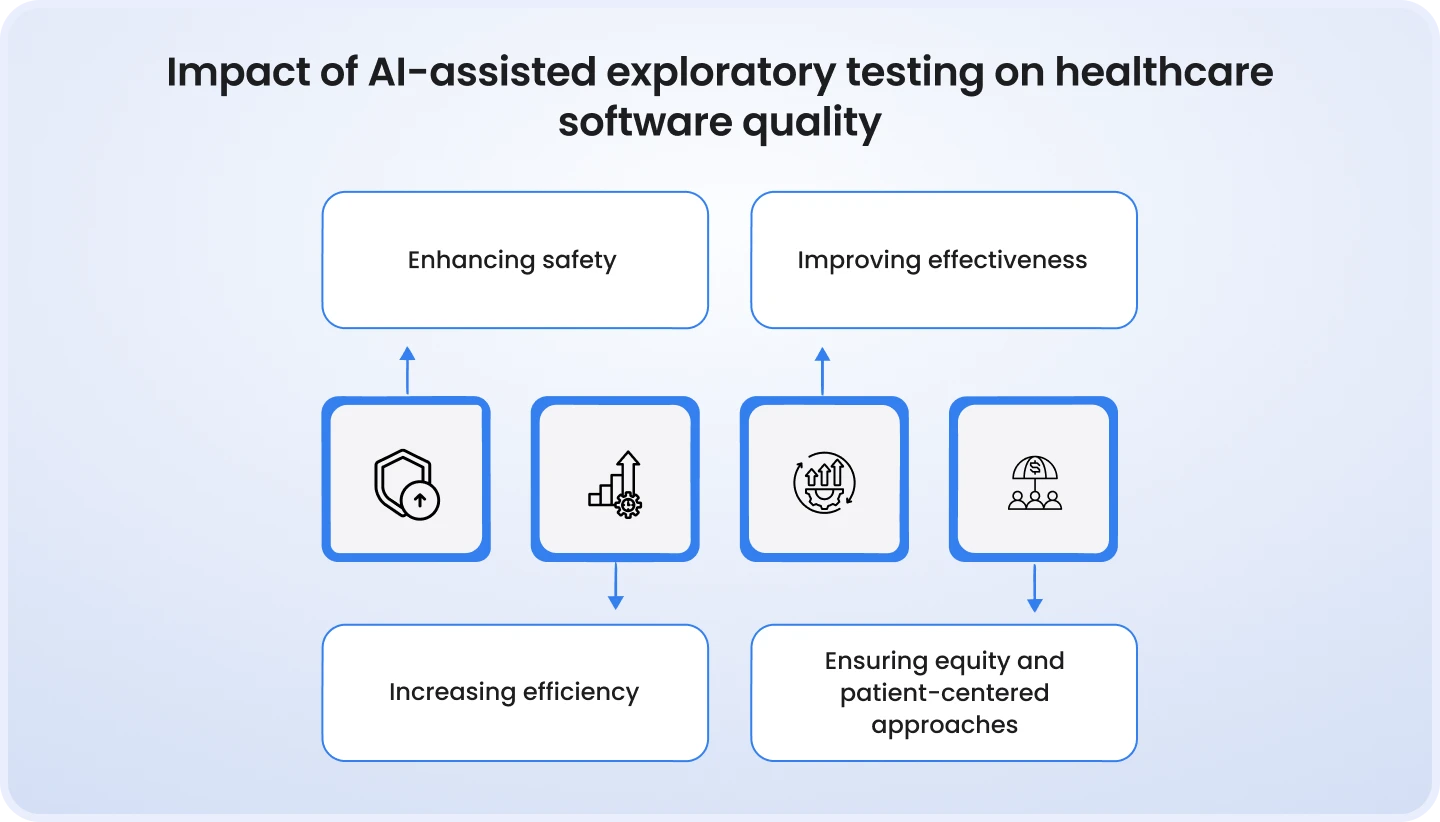
When it comes to healthcare application testing, comprehensiveness is vital. None of us would feel comfortable using a healthcare app that underwent only automated checks. Exploratory testing, as part of the manual QA toolbox, plays a quiet but essential role here. It fills the blind spots other techniques miss, helping to ensure product quality and patient safety.
Why automation alone doesn’t work in healthcare app testing
Test automation is extremely good at predictable checks, but healthcare solutions often operate in unforeseen conditions. Electronic health records, remote monitoring tools, telehealth platforms, and SaMD carry risks that go beyond standard metrics. A confusing field label, a poorly timed session timeout, or an alert that disappears too quickly can lead to a serious safety issue.
Integration bugs and unexpected user behavior are exactly the kinds of problems automation tends to miss, and that’s not because the tools aren’t good, but because they can’t think like a human under pressure. Automated tests can confirm that a button works, but they can’t confirm that a clinician will still find it under stress or that a patient will understand what to do next.
A usability study recorded 258 usability issues across candidate EHR systems, which were uncovered only when clinicians used them in realistic workflows. This shows the limits of scripted tests for capturing real-world UX/workflow gaps.
So, automation holds its own mission, helping to run obvious tests that identify expected issues. When it comes to unpredictable risks, the creativity of humans is needed.
The value exploratory testing brings
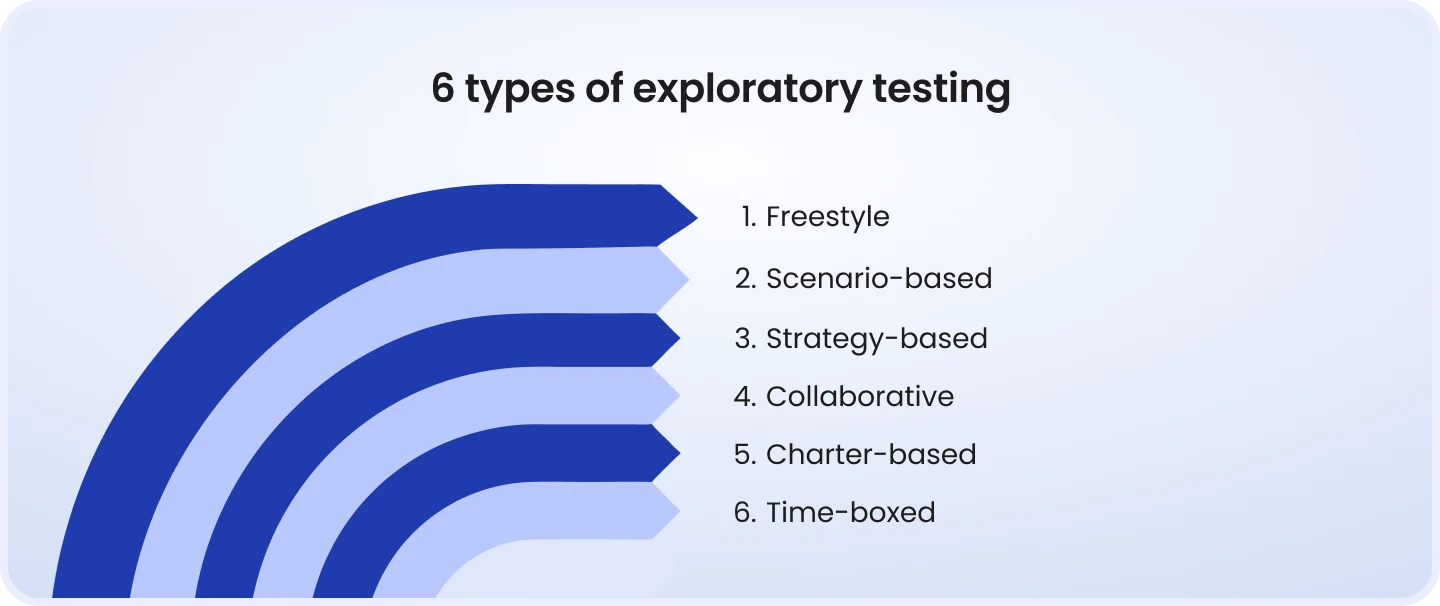
A case study analysis-based survey on the role of exploratory testing in Agile software development shows that it is essential in Agile settings because it gives flexibility, adaptability, and the ability to find unobvious needs and faults. Since Agile development is iterative and requires constant modification, exploratory testing works well for verifying software features that are always growing.
But why is exploratory testing particularly valuable for healthcare software? Let’s review some real scenarios:
Investigating real-world user behavior
Healthcare apps are used by patients, doctors, and administrators. Each of these users interacts with the app differently.
Exploratory testing gives QA teams an opportunity to follow non-obvious but realistic human interactions, uncovering issues caused by unexpected actions. For example, a doctor may violate a recommended workflow to save some time, or a patient might provide uncommon data formats. These scenarios must be tested because bugs here can affect patient safety and overall usability.
Detecting critical UX and workflow flaws
Any healthcare system can hide certain issues in workflows or UX. Exploratory testing uncovers these hidden problems by simulating real-world user behavior and checking scenarios that scripts might overlook. In healthcare, this may help catch things like alerts triggered at the wrong time or confusing UI elements. By identifying such issues early, exploratory testing ensures the safety and user-friendliness of healthcare applications.
Executing exploratory testing, the DeviQA team spotted exactly these kinds of defects in CipherHealth, a patient engagement platform. We noticed that alert notifications vanished too quickly during multi-step workflows and that the layout of patient notes made users pause mid-decision. Automated tests covering these areas passed, but exploratory testing revealed issues that required fixes.
Covering edge cases
Healthcare software must comply with HIPAA, GDPR, ISO 13485, and other regulations, which often require extensive coverage of edge cases. Exploratory testing uncovers such cases by enabling testers to play with unusual inputs and unexpected workflows, checking how the system reacts and documenting any gaps that automated scripts might miss.
At DeviQA, when providing HIPAA compliance testing services, our team uses exploratory testing to investigate unexpected system interactions and capture hidden risks.
The right time for exploratory testing in your QA process
Exploratory testing can be carried out at different points in the healthcare software lifecycle. It may be equally valuable for first shaky prototypes and last-minute release candidates.
Flexibility makes exploratory testing ideal whenever systems are changing, features are added, or workflows are complex. Let’s highlight its role at different stages:
During evolving requirements or refactoring
Healthcare projects rarely follow a predesigned plan. Requirements change, workflows get re-designed, and sometimes whole architectures are refactored. In these moments, automated tests are useless, as it would take too much time and effort to keep them relevant and updated. Exploratory sessions, in turn, let testers quickly learn the new changes and spot bugs before they become more serious problems.
For example, on the Catalyst project, where we tested an advanced solution for BCBA therapists, exploratory sessions helped us detect integration bugs after an architecture migration. It served as a safety net, which is so needed when everything’s in motion.
After major updates and integrations
Every new feature, plugin, or third-party integration opens the door to unintended side effects. While automated scripts tackle predefined scenarios, exploratory testing addresses the messy intersections where systems fail. Whether a new appointment scheduling feature has been added or an updated insurance claims API has been integrated, exploratory testing makes sure the new code works flawlessly with existing systems.
Before releases
Critical workflows in healthcare applications, such as patient data handling, medication ordering, or dosage calculation, demand extra attention before go-live. Exploratory testing may step in to additionally validate that these processes work correctly in real-world scenarios and exclude the possibility of hidden safety or usability issues.
As a continuous complement to automation
Exploratory testing doesn’t compete with automation but complements it. Running small, time-boxed sessions alongside regular automated runs ensures no blind spot is left unchecked, whether in early builds or production-ready releases.
At what phase is your healthcare software development? Surely, exploratory testing services may be helpful right now.
How to perform exploratory testing well
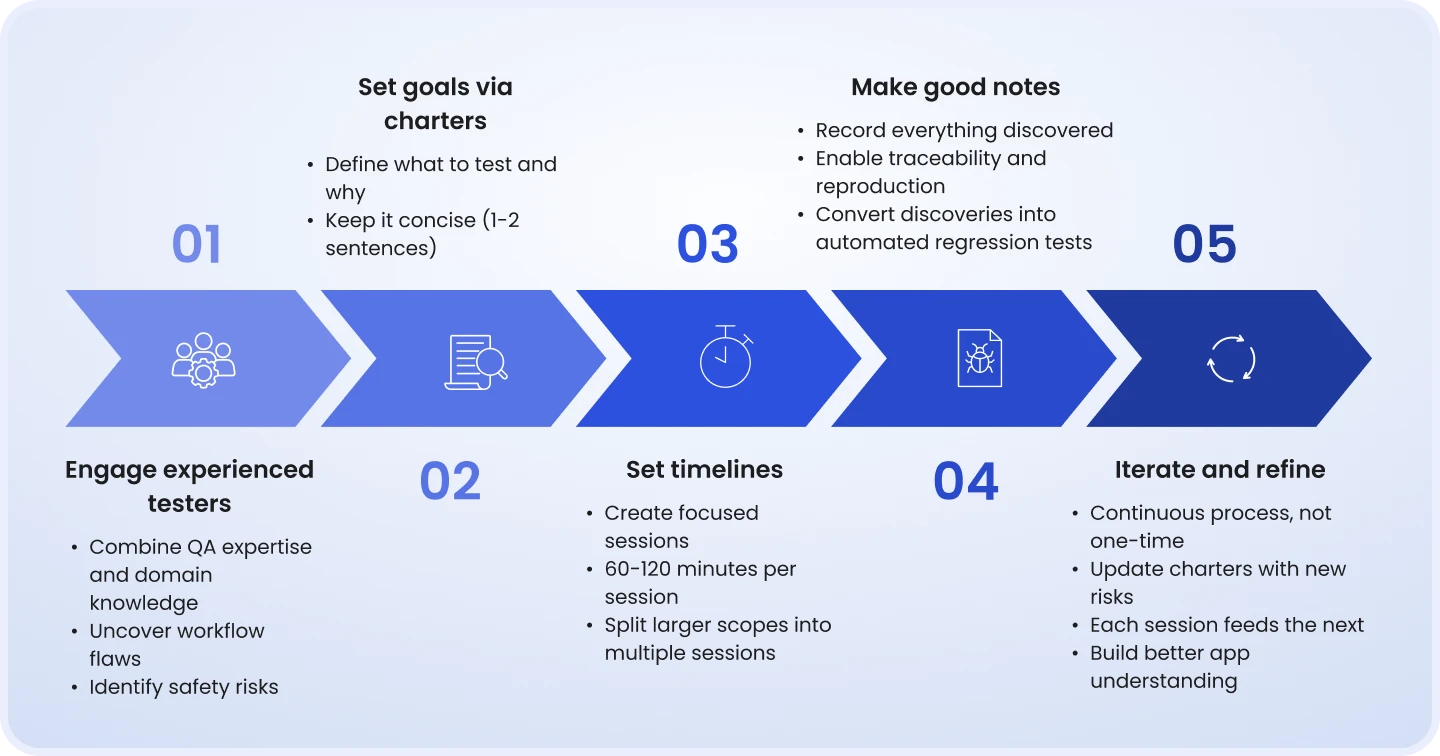
Software testing in the healthcare domain is a daunting task, but out of all QA activities, exploratory testing may seem to be the simplest thing to do. However, to get the real value, you need to take the right approach. Here are a few tips that can help you:
- Engage experienced testers
Exploratory testing works best when carried out by testers who combine QA experience with domain knowledge. These are essential ingredients needed to uncover workflow flaws and safety risks.
- Set goals via charters
Take your time to prepare charters that explain what to test and why. They don’t need to be long - one or two sentences is enough.
- Set timelines
Time frames make exploratory sessions more focused. Try to keep each one within the recommended 60–120 minutes. If more ground needs to be covered, split it into several sessions with new charters.
- Make good notes
Bugs, odd behaviors, usability concerns, open questions – jot down everything you discovered. Your notes don’t need to be polished. The key is traceability so that issues can be reproduced and tracked later. Convert your discoveries into automated regression tests to keep a pipeline strong and prevent issues from reappearing.
- Iterate and refine
Exploratory testing isn’t a one-time task. Charters evolve as new risks are spotted or features change. Each session feeds the next, continuously building a better understanding of the app and its weak points.
Wrap-up
In the healthcare domain, risks are unacceptable. Therefore, quality assurance applies different testing techniques to ensure the reliability and safety of healthcare apps. Exploratory testing is one of them, as it brings visible value by spotting issues no checklist or automated run would catch. Its execution is an opportunity to detect issues in staging instead of reading about them in a regulatory recall report or user feedback.
See how exploratory testing can strengthen your healthcare software – schedule a call with DeviQA, a reputable provider of healthcare software testing services.
Build software that works the way you imagined
About the author
Senior QA engineer
Mykhailo Ralduhin is a Senior QA Engineer at DeviQA, specializing in building stable, well-structured testing processes for complex software products.