

Platform rebuilds rarely break everything at once.
Quality degrades subtly, regressions creep in, data starts to drift, and familiar workflows behave just differently enough to cause doubt. In healthcare tech, users don’t report these issues. They lose trust and work around the system.
That’s why rebuilding isn’t only a technical challenge. It’s a quality preservation problem.
We saw this during our work with GoodShape, where rebuilding had to happen under live usage and real production data. The risk wasn’t platform stability, it was losing behavior users already relied on.
During rebuilds, maintaining behavior matters far more than shipping new code.
What really breaks during platform rebuilds
When teams talk about rebuild risks, they usually think in terms of features. What actually breaks during a rebuild is continuity.
The most damaging issues are not new bugs, but changes to behavior users silently depended on.
Regressions are the first signal.
Workflows that were stable for years start producing different results. Edge cases that were previously handled, sometimes unintentionally, disappear during re-implementation. Nothing is technically “broken,” but outcomes change.
Data drift follows.
The same underlying data produces different calculations or aggregations in the rebuilt system. Reports no longer align with historical results, raising questions that are difficult to answer and even harder to ignore.
Then come the behavior changes users didn’t ask for.
Small adjustments in workflows invalidate established habits. UI “improvements” increase friction instead of clarity. What looked like cleanup or optimization quietly becomes a trust issue.
In QA for healthcare platforms, this compounds quickly. Historical data isn’t archival, it drives decisions. Small inconsistencies don’t stay small. They echo forward, undermining confidence long before anyone labels them as defects.
Why feature-based testing fails during rebuilds
Feature-based testing is built on a simple assumption: changes are isolated.
That assumption breaks down during platform rebuilds. Rebuilds rarely introduce new functionality. They change how the system works under the hood, while the surface looks the same.
Scope
Specific feature-focused
Entire system or functionality
Objective
Validate individual features
Ensure complete system functionality
Granularity
Detailed and isolated
Broader and holistic
Examples
Testing the "Search" feature
Testing search combined with filtering and sorting
Dependency
Features can be tested in isolation
Requires integration and interaction of multiple components
When QA focuses only on feature validation:
individual screens pass
APIs respond correctly
new code meets its acceptance criteria
Yet the system as a whole behaves differently.
This is the critical failure mode of rebuild testing: “all tests pass,” while real user workflows are broken.
Feature-level testing can’t detect when:
a workflow produces the same result, but through a different path
timing or sequencing changes alter outcomes
integrations remain functional but no longer align with user expectations
During rebuilds, correctness isn’t about whether a feature works in isolation. It’s about whether the system behaves the same way users rely on.
That’s why QA must shift from feature testing to behavior validation, validating continuity, outcomes, and expectations across the system, not just individual components.
From feature testing to behavior validation
Rebuilds force QA to change mindset.
When architecture shifts, the primary question is no longer “Does this feature work?” but “Does the system still behave the way users depend on?” Behavior validation moves QA from validating implementation to protecting outcomes.
What behavior validation actually means
Behavior validation starts with one defining question: what must stay the same?
Instead of checking isolated endpoints or UI elements, QA validates:
complete workflows from start to outcome
rules and constraints applied across the system
results produced over time, not just in a single session
A critical practice during rebuilds is comparing legacy and rebuilt behavior. The goal isn’t to prove the new system works, but to confirm it behaves equivalently where equivalence matters.
This includes validating:
inputs that produce the same outputs
edge conditions that historically shaped user expectations
long-running scenarios that span days, weeks, or months
QA as the keeper of behavioral contracts
During rebuilds, QA becomes the keeper of behavioral contracts, the unwritten agreements between the system and its users.
These contracts define what cannot change, even when everything else does.
QA formalizes those contracts through:
documentation that captures business rules and exceptions
test cases that lock down expected behavior
regression coverage designed around workflows, not modules
In healthcare platforms, these contracts are not abstractions. They are concrete:
absence calculation rules
return-to-work logic
reporting consistency across historical data
When QA owns these non-negotiables, rebuilds stay safe. When they don’t, quality resets quietly, and trust is lost without warning.
Regression strategy matters more than velocity
During platform rebuilds, velocity becomes a misleading metric.
Shipping faster doesn’t mean you’re safer. In fact, speed often hides risk. Every rapid release amplifies the chance that subtle regressions slip through, especially when underlying logic is being rewritten and legacy behavior is only partially understood.
Why speed is the wrong success metric during rebuilds
Fast releases reward visible progress, not correctness.
When teams optimize for velocity during a rebuild:
regressions surface later, further from the change that caused them
confidence drops even as release frequency increases
teams start relying on post-release fixes instead of prevention
Velocity without confidence leads to a dangerous pattern: the platform moves forward faster while trust erodes quietly underneath. In healthcare systems, that trade-off is unacceptable.
Designing regression around critical workflows
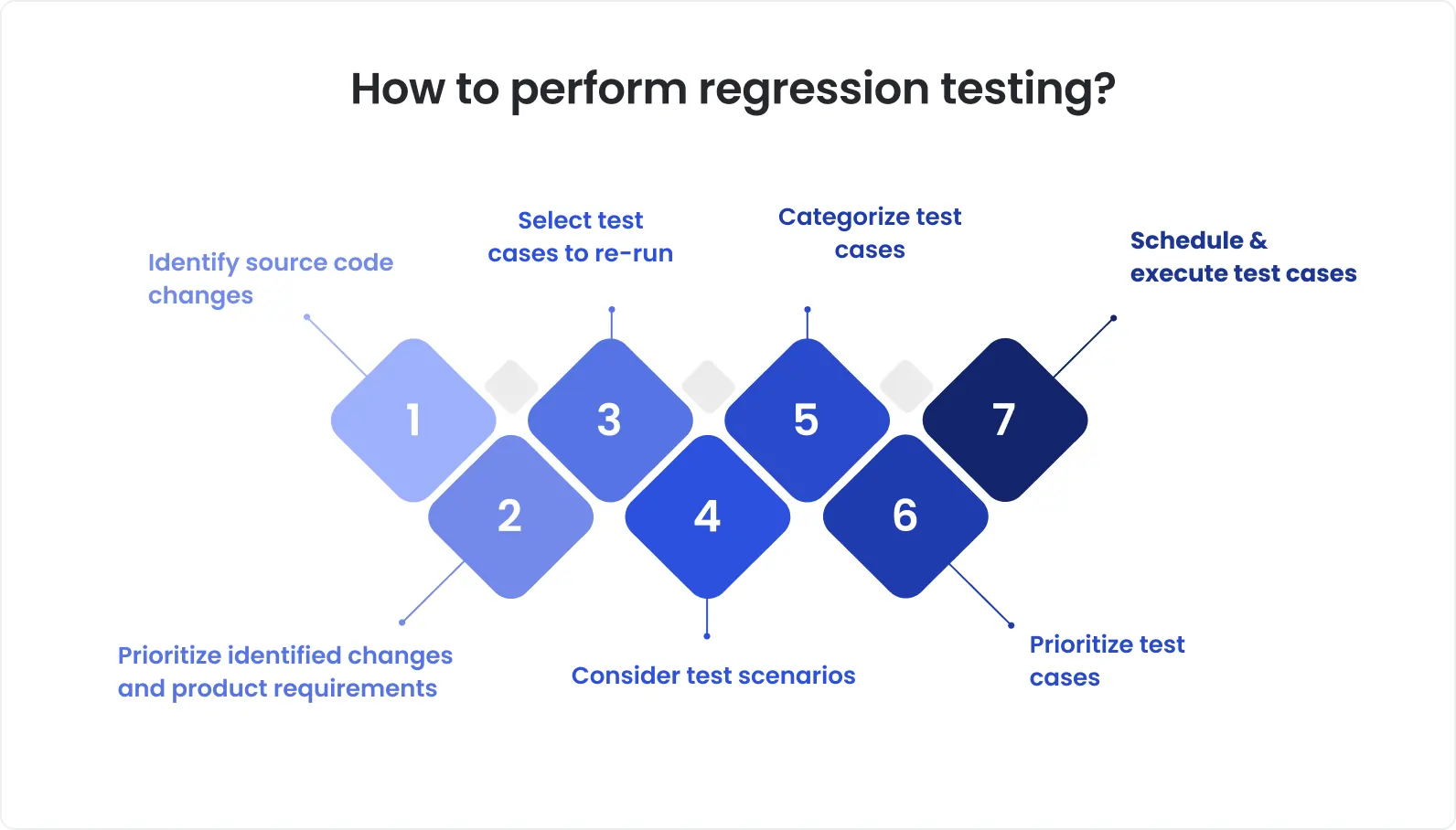
The purpose of regression testing during a rebuild is not coverage. It’s risk control.
Effective regression strategy starts by identifying what cannot break:
high-frequency workflows users rely on daily
high-risk logic tied to compliance, reporting, or decision-making
behaviors that have accumulated historical meaning over time
These paths must be locked down before the rebuild accelerates. Test cases, datasets, and expected outcomes become reference points against which every change is measured.
During migration, these workflows aren’t tested occasionally. They’re re-tested relentlessly, across releases, environments, and stages of the rebuild.
When regression is framed as risk control rather than QA overhead, it stops slowing teams down. It becomes the mechanism that allows rebuilds to proceed without breaking the product users already trust.
Rebuilding QA alongside the platform – The GoodShape experience
In a live platform rebuild, QA can’t lag behind architecture. It has to evolve in parallel.
That was the reality in the GoodShape rebuild. The platform was being modernized while actively supporting customers, existing data, and established workflows. Pausing delivery or “resetting” quality wasn’t an option.
To make the rebuild viable, QA itself had to be rebuilt.
The shift was deliberate:
From ad-hoc checks to a structured QA system that could survive architectural change
From feature verification to workflow validation, ensuring outcomes stayed consistent
From informal knowledge to documented behavior, so logic wasn’t lost during re-implementation
Concretely, this meant:
Formalizing documentation to preserve legacy behavior and business rules
Building a regression suite mapped to real absence-management and return-to-work workflows
Actively validating parity between old and new logic as components were migrated
QA wasn’t just checking the rebuilt platform, it was acting as the reference point for what “correct” meant.
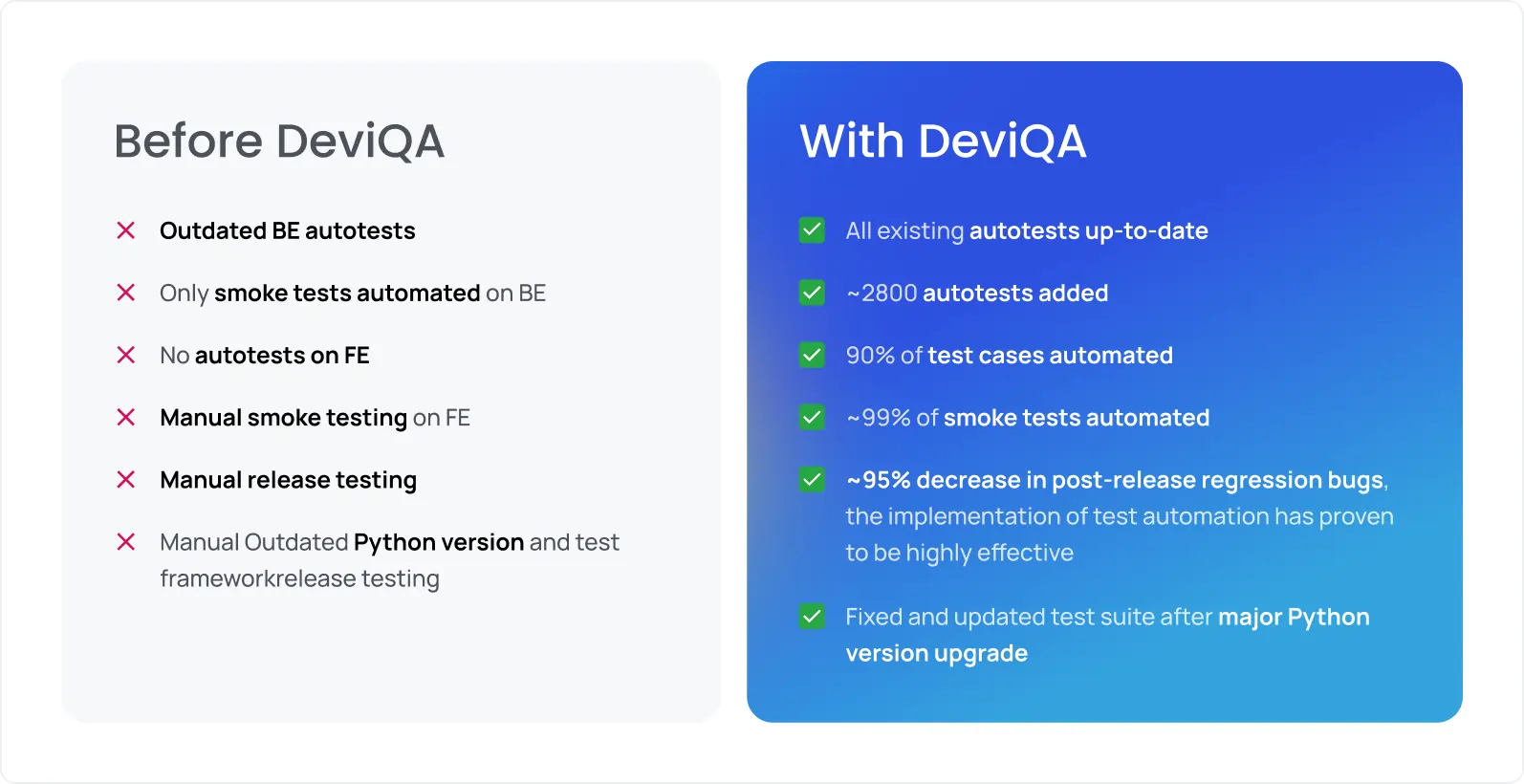
The outcome was stability under change:
The rebuild progressed without quality resets
Releases remained predictable even as architecture evolved
Late-stage surprises decreased as risk moved upstream into QA
The important point is this: GoodShape is not an exception. The same pattern appears whenever live healthcare platforms are rebuilt successfully.
Rebuilds succeed when QA is treated as infrastructure, rebuilt alongside the platform, not bolted on after the fact.
To sum up
Re-architecture changes how a system is built. It must not change how the system behaves.
During rebuilds, code is temporary. Architecture is replaceable. Behavior is not. That continuity is what users trust, and what QA exists to protect.
This is where QA shifts from a supportive function to a strategic one.
QA provides stability when everything else is in motion:
it preserves expected outcomes as implementations change
it validates continuity across parallel systems and phased migrations
it anchors decisions when trade-offs arise between “cleaner code” and “safe behavior”
The real leverage comes from artifacts that outlive any single rebuild:
documentation that captures business logic and edge cases
test cases that define non-negotiable behavior
regression suites that continuously enforce those contracts
When architecture changes without these anchors, quality resets silently. When QA owns them, systems can evolve without breaking trust.
If your team is rebuilding a healthcare platform and needs QA that preserves behavior through change, DeviQA supports re-architecture projects with structured regression, behavior validation, and long-term QA ownership.