
- Home /
- Industries /
- DORA compliance consulting
DORA compliance consulting
Prove your operational resilience under DORA.
If resilience isn’t tested and documented, it won’t pass review. DeviQA helps fintech teams validate system survival and produce audit-ready evidence regulators expect.


Trusted by
Understanding DORA and its role
DORA compliance refers to an organization’s ability to meet the requirements of the EU Digital Operational Resilience Act by establishing, operating, and validating effective controls for managing ICT risk.

DORA applies if:
The organization operates in the EU financial system, or
It provides ICT services that support critical or important functions of regulated financial entities

It requires organizations to:
Implement ICT risk management frameworks
Detect, classify, and report ICT incidents
Conduct digital operational resilience testing
Manage third-party ICT risk
Maintain audit-ready evidence
Our solutions for your DORA
compliance challenges
DeviQA helps you turn DORA from a regulatory risk into a controlled, testable engineering process.

Who is subject to DORA
compliance?
Financial institutions
Organizations directly regulated under
DORA include:
credit institutions and banks
payment institutions and electronic money institutions
investment firms and trading venues
insurance and reinsurance undertakings
asset managers and fund administrators
crypto-asset service providers (CASPs)
ICT and technology service providers
DORA extends regulatory oversight to critical third-party ICT providers, including:
cloud service providers
data hosting and infrastructure platforms
core banking and financial software vendors
managed service and outsourcing providers
The cost of ignoring DORA
Financial penalties
Fines of up to €5M or 3–12.5% of annual turnover for serious breaches.
Loss of EU market access
Regulators can suspend or restrict operations within the EU financial market.
Executive liability
Senior managers may face bans of up to 10 years for repeated or severe violations.
Revenue restrictions
Authorities may limit trading activity and seize profits linked to non-compliance.
Higher incident impact
Weak resilience increases exposure to outages, cyber incidents, and prolonged recovery.
Reputation damage
Regulatory failures erode trust, leading to lost clients and stalled partnerships.
Make sure you meet DORA requirements
Our DORA compliance consulting services
We deliver engineering-led QA and testing services designed to meet DORA’s operational resilience requirements, with measurable results and audit-ready evidence.
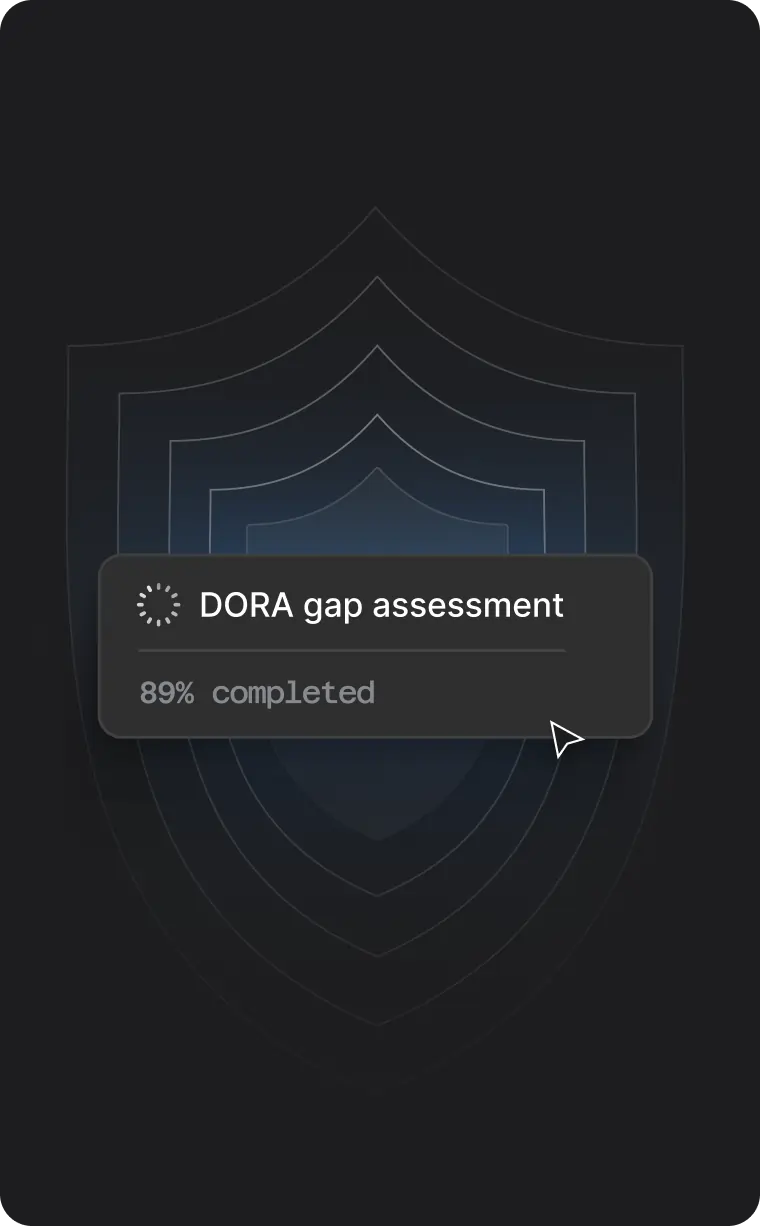
DORA gap assessment
For teams starting their DORA journey
We establish a clear baseline of your current QA, security, and resilience posture against DORA requirements.
What’s included:
Review of QA, security, and disaster recovery processes
Mapping of current controls to DORA expectations
Identification and prioritization of ICT risks
3–6 month remediation roadmap
Operational resilience testing
For teams preparing for audits and regulatory review
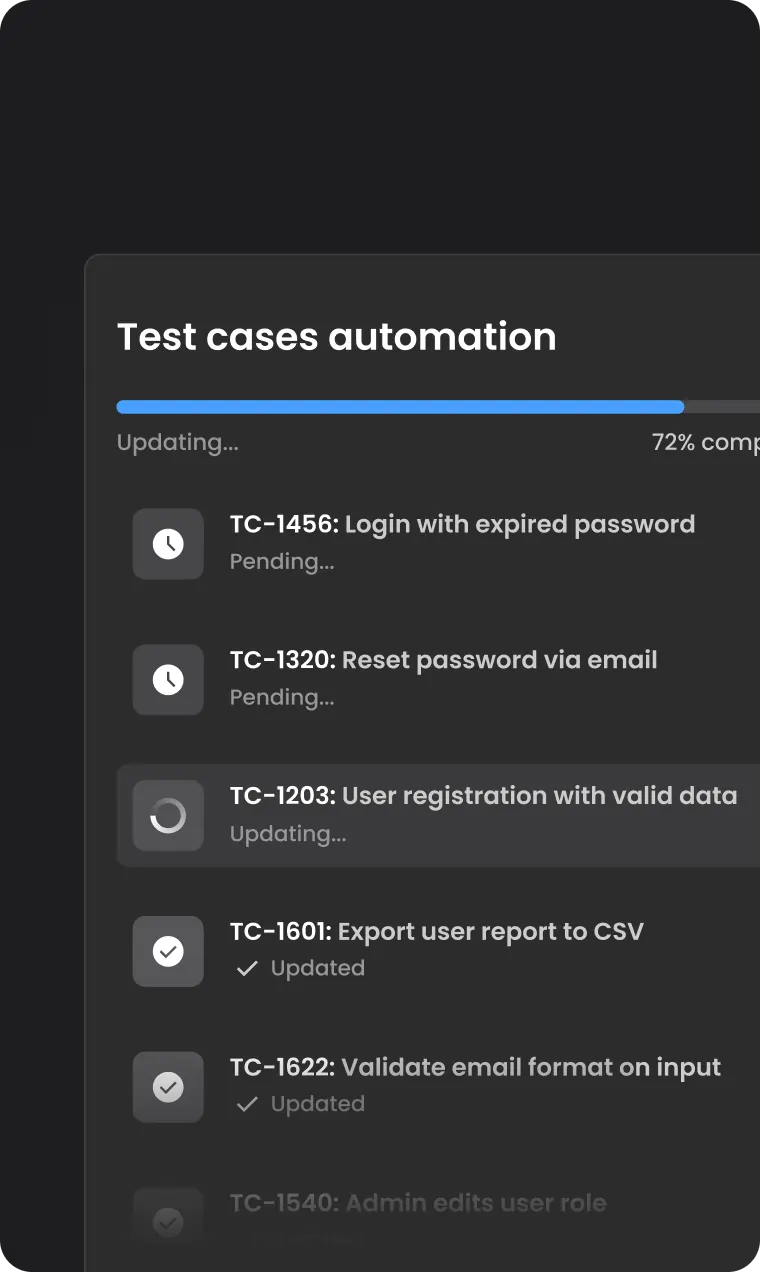
We validate that your systems can survive and recover from real-world failures, and document the results.
What’s included:
Disaster recovery and failover testing
Load and stress testing of critical services
Recovery and degradation scenarios
External API and third-party failure testing
Formal test reports for regulators
Security testing under DORA
For teams strengthening ICT risk controls
We integrate security validation into your QA and delivery processes.
What’s included:
Coordination of penetration testing and vulnerability scanning
IAM, authentication, and authorization testing
API security validation
Continuous security regression testing
Continuous DORA compliance
For teams operating in regulated mode
We keep your compliance posture current as systems, vendors, and releases change.
What’s included:
Regular resilience and recovery testing
Ongoing security regression
Scheduled DR and failover drills
Continuous update of audit evidence
Support during regulatory reviews

Why choose DeviQA for DORA compliance
Engineering-led compliance strategy
Built by QA and reliability engineers with 15+ years in regulated systems, not consultants translating regulation into slides.
Clear, risk-prioritized remediation roadmap
We focus on top 20–30% of risks that typically drive 80% of audit findings, reducing unnecessary remediation effort.
Measured operational resilience
Recovery is validated through execution. Clients typically discover 2–4× gaps between documented and actual RTO/RPO during first resilience tests.
Independent QA validation
Vendor-neutral testing provides objective evidence regulators expect, without conflicts of interest or tool bias.
Scenario-based resilience testing
We test real failure conditions: outages, degraded capacity, and third-party failures, the scenarios behind most major financial service incidents.
Continuous compliance support
Ongoing testing reduces last-minute remediation costs, which are commonly 2–3× higher when compliance gaps are found late.
Audit-ready documentation by default
Every test produces traceable artifacts aligned with audit expectations, cutting audit preparation time by weeks, not days.
Long-term operational partnership
From assessment to continuous compliance, our model supports quarterly testing cycles and ongoing regulatory readiness, not one-off projects.
Be prepared for DORA audits with clear evidence
Our approach to DORA compliance
Our goal is simple: to make DORA compliance a predictable outcome of engineering practices, not a recurring risk.
Risk-first, not checklist-driven
We start by identifying critical services, dependencies, and failure points. Effort is focused where operational and regulatory risk is highest.
Test real failure scenarios
We validate resilience through controlled, scenario-based testing: outages, recovery, degradation, and third-party failures, not theoretical reviews.
Measure, don’t assume
Recovery objectives (RTO, RPO) are measured through execution, not taken from policies or estimates.
Evidence by default
Every activity produces traceable, audit-ready evidence aligned with DORA expectations, clear inputs, results, and outcomes.
Continuous, not one-off
As systems, releases, and vendors change, testing and evidence are updated. Compliance stays current without last-minute remediation.