
Written by: Chief Executive Officer
Oleg SadikovUpdated: 01.12.2025
13 min read
Testing is undergoing a significant shift. Recent years have brought in a notable trend — independent software testing, driven by the need for unbiased quality checks and faster delivery cycles. More and more companies are opting for third-party testing over traditional in-house QA.
The next 8 years are supposed to show a 5% CAGR and USD 40 billion evaluation for the software testing market. Even more exciting, the global software testing industry should grow at up to 18.5% CAGR in the next 6 years. And the lion’s share of this evolution belongs to unbiased software testing.
So, what is it, and why is it gaining traction in the industry? In a nutshell, independent software testing is an outsourcing testing activity that allows clients to tap into specialized expertise and resources.
This is a far cry from traditional in-house QA, where testing is performed in-house by the company's own team. In-house QA definitely has its advantages. Yet, specialized testing services offer a more flexible, cost-effective, and efficient way to ensure software quality.
Below is a deeper explanation of the benefits of independent testing, from cost savings and unbiased feedback to specialized expertise that in-house QA teams often lack. Make sure to read it up before scaling your in-house QA team, as the provided benefits of independent QA may talk you into another decision.
In-house QA vs. independent testing: Key drawbacks
In-house QA teams often lack flexibility and objectivity, which is why many companies turn to independent software testing as a way to fill these gaps.
Lack of resources
BCP plan forces companies to save some money on the off chance. Consequently, we have budget limits. This often means fewer testing tools and outdated technology.
Now, follow the chain of thoughts: you struggle to catch up with rapid technological advancements - this can lead to slower testing cycles and missed bugs - your product gains some negative aura in the niche - demand decreases - you lack resources. Closed loop.
Don't gamble on reputation. Mitigate risks with independent software testing
Now, follow the chain of thoughts: you struggle to catch up with rapid technological advancements - this can lead to slower testing cycles and missed bugs - your product gains some negative aura in the niche - demand decreases - you lack resources.
Closed loop.
Challenges with rapid tech advancements
We all know how quickly technology evolves. In-house teams might struggle to stay updated with new testing methodologies or tools without comprehensive training. Continuous education is vital but if you are not a huge corporation, it can be costly and time-consuming for you. Without exposure to diverse projects, in-house testers may not gain the breadth of experience needed to tackle complex issues.
For instance, with the rise of mobile and IoT devices, testing now requires knowledge of various operating systems and hardware configurations. In-house testers might lack expertise in these areas, which is why many companies turn to independent software testers who specialize in multi-device, mobile, and IoT testing.
Bias and insularity
When you know the product inside out, you may miss some important unconscious details. In-house teams might overlook defects because they’re too close to the project. Let’s face it, many tests may be based on assumptions, missing critical edge cases.
That’s why we bring up the in-house QA vs. independent testing topic. New fresh perspective means open doors for your product improvements.
Example: Windows Vista. During the development phase, the in-house QA team, deeply familiar with the product, failed to recognize several usability issues that plagued the operating system upon its release.
Consequently, Vista was met with widespread criticism for its complexity and performance issues. Microsoft couldn’t afford the reputation damage so a swift pivot back to Windows XP for many users was inevitable.
Example 2: Facebook’s news feed feature. The in-house team did not adequately test how users would interact with the novelty feature. When it launched, many users expressed dissatisfaction over privacy concerns and the overwhelming amount of information.
No biggie for such behemoths. However, it’s another stone in their garden.
Testing scalability
Scaling testing efforts on short notice is tough with in-house teams. Hiring and training new staff takes time — time you might not have when deadlines are tight. In-house teams might be stretched thin during peak periods, leading to burnout and mistakes.
Need for constant training
Adding more testers to the team isn’t always practical. Recruitment processes are lengthy, and training new hires diverts resources from critical tasks. There's also the risk of turnover after investing in training, which can set the team back even further.
The rise of independent software testing
Small and medium-sized businesses especially benefit from working with an independent software testing company, since these providers focus exclusively on testing and QA at scale They cover the full range: functional testing, performance assessments, security evaluations, usability studies, and compliance verification. Let’s take a glance at some additional advantages of independent testing.
Expertise and specialization
If you have a toothache, you want to appoint a dental specialist, not a general therapist, innit? Similarly, it’s quite logical to hire professionals with specialized skills.
These experts stay current with the latest testing methodologies, tools, industry best practices, they learn new technologies and approaches in their niche.
As an experiment, ask your testers if they advanced in something beyond Selenium and Cypress. Independent software testers might have deep knowledge in Katalon, Appium, TestCafe, etc — in automated testing frameworks in general. This all is alongside mobile application testing and cybersecurity assessments.
Pushing forward our metaphor about dental services, you'd rather have a dentist with experience in gentle anesthesia than someone who knocks you out with a baton, wouldn't you?
Objectivity and unbiased testing
Without the familiarity that in-house teams have with the product, independent testers are more likely to identify defects and usability issues that internal teams overlook. This objectivity results in more thorough and impartial testing, uncovering hidden problems that could affect user satisfaction and product performance.
Scalability and flexibility
Independent software testing offers the ability to scale testing efforts up or down based on project needs. If a project requires rapid testing due to tight deadlines or additional features, external teams can quickly allocate the necessary resources. This flexibility eliminates the delays associated with hiring and training new in-house staff, allowing companies to respond efficiently to changing project demands.
Cost efficiency
You may think that employing external testers will cost you an arm and a leg. Not exactly. Independent testing can even lead to cost savings compared to maintaining a large in-house QA team.
Look at Google, which works with a wide network of contractors – often partnering with an independent software testing company to gain flexibility and cost efficiency without building huge internal QA departments. Large companies often avoid recruiting and training spending. As well as costs related to testing infrastructure and tools. Independent testing companies often partner with relevant tool companies and have greater efficiency due to their economies of scale.
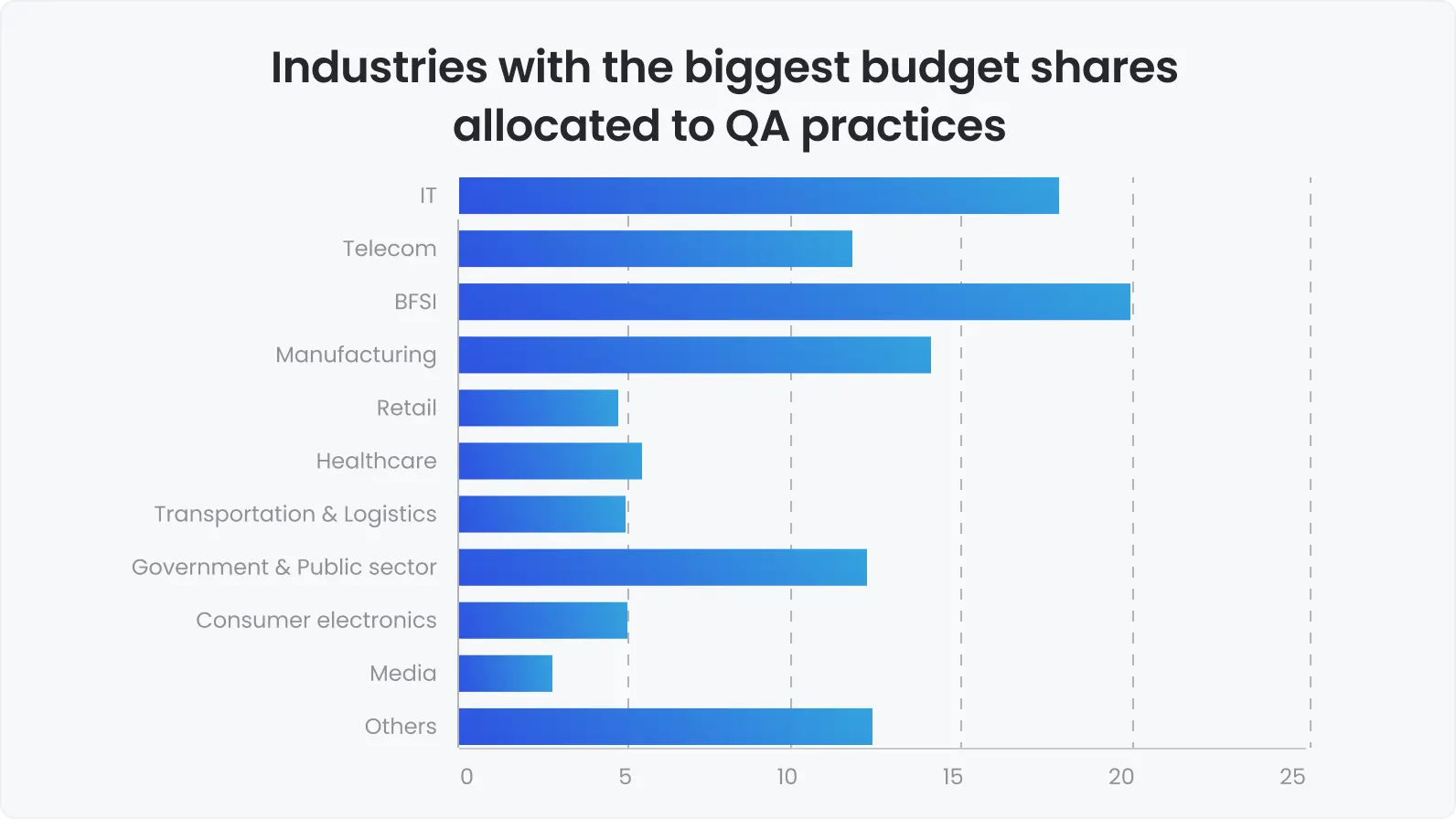
Industry researches show that companies prefer to outsource QA activities due to efficiency and cost reduction. In this light, specialized QA talents help your company save more, focus on strategy initiatives, and improve your main strengths.
The benefits of independent testing for better software quality
The benefits of independent testing go beyond cost savings – it delivers higher defect detection, stronger compliance, and overall better user experience.
Comprehensive testing approaches
Customers are more likely to forgive bad experiences to a brand they trust. A quite logical question: what makes people trust you? In the software products field, these are convenience, smooth flow, and security. And the lion’s share of these features is impossible without full-cycle testing.
External software testing providers know the ropes of which tool fits the particular situation and challenge. For example, Selenium for automation, JMeter for performance testing, and OWASP ZAP for security assessments.
Chances are, they adhere to industry standards and best practices, such as ISTQB guidelines. They implement rigorous test plans that cover functional, regression, integration, and user acceptance testing. The most important is that they value their reputation — just because narrow expertise is their most powerful specialty customers pay for.
Advanced techniques
You must have a knack for ensuring fast feedback. There is a repetitive test execution for that. Performance testing simulates real-world scenarios, and experience-backed testing providers might have a more advanced understanding of LoadRunner or Gatling to simulate the mentioned real-world scenarios.
Security testing is another critical area where independent testers excel. Vulnerability assessments and penetration testing with Burp Suite and Nessus help identify and address security flaws. An external proactive approach helps clients safeguard their software against potential threats.
Improved results
Consequence of the previous points. If the combination of comprehensive testing approaches and advanced techniques works well, this inevitably leads to higher defect detection rates and improved product quality.
An additional perk is control. Many CTOs and CEOs are afraid to let go of the reins. Independent testing firms provide detailed reports and actionable insights, ensuring the client has all the information to make informed decisions.
Case study: Blackline
A financial and accounting company teamed up with an independent software testing firm to improve the quality of its software products. Such independent software reviews helped uncover hidden defects, improve stability, and speed up product releases. Legacy software, testing bandwidth, and the need for specialized testing skills were the most painful moments thorns in the …neck.
The independent testers utilized advanced automation frameworks and testing tools to execute a wide range of test cases efficiently. This partnership resulted in a significant reduction in critical defects and improved overall product stability. Blackline was able to release impactful F&A software products, streamlining their internal and external accounting processes.
Case study 2: Arklign
Over 5,000 test cases, 95% of test coverage, and 12K+ bugs logged. Could we imagine that the dental platform could improve so significantly? Independent testing enhance the project’s quality across different platforms and devices. Just three QA specialists (and their specialized testing expertise) ensured excellent performance and user experience.
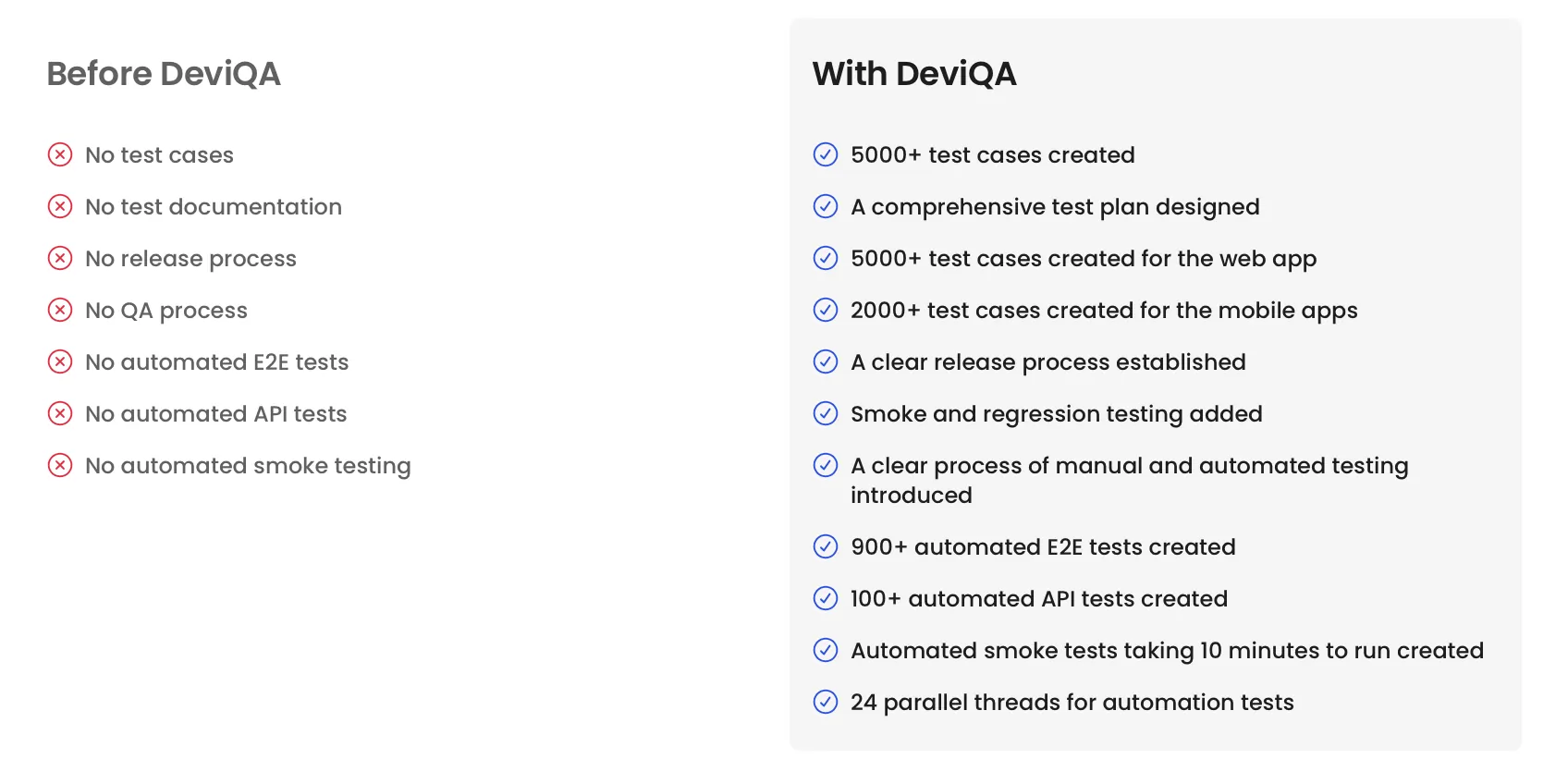
Software quality improvement isn’t an overnight process. However, who said that it must be nong-winded?
How to implement independent software testing successfully
Successful adoption starts with understanding how independent testing companies can complement your existing QA efforts and close critical skill or resource gaps.
Assessment and planning
The first step is to identify gaps in your testing processes: critical bugs in production, an overwhelmed in-house team, or a lack of specific expertise. This way, you can determine whether you need independent software testing at all.
If you are confident in the need, an independent software quality assurance review can reveal bottlenecks and highlight where external expertise could make the biggest impact. Setting clear objectives (e.g., improving test coverage, reducing time-to-market, or enhancing product quality) will guide your collaboration and make an independent software quality assurance review more effective in pinpointing weaknesses and opportunities.
Selecting the right provider
So how to pick the right one among endless offers on Glassdoor and Clutch? There are some factors to size up:
Wide experience: Look for a specifically oriented provider with solved cases in your industry. They should have experience with similar technologies and project scopes.
Communication habits: If you can’t get on the same page during the pre-cooperation stage, chances are you won’t make it in the future. The provider should demonstrate transparency and a collaborative approach.
Reputation and references: When evaluating an independent software testing company, check client testimonials and case studies, and ask for references to confirm their reliability.
Scalability and flexibility: Ensure they can scale their services to meet your project demands, whether you need to ramp up quickly or scale down after peak periods.
Integration and collaboration
Let’s take a more detailed look at communications and teamwork. Word of mouth usually makes a difference here. In the US and Britain, no-names have little chance of landing the project from a famous or stable company.
Another side of the monad is the integration of independent testers with your in-house teams. Here are some proven strategies for a smooth teamwork:
Single communication tool: Slack, MS Teams, Skype — whatever. Set up dedicated communication platforms and regular meeting schedules. This makes a difference.
Clearly defined roles and responsibilities: Clearly outline what is expected from both your in-house team and the independent testers to avoid overlaps and confusion.
Access to resources: Ensure independent testers have the necessary access to documentation, code repositories, and test environments to perform their tasks effectively.
Cultural alignment setup: Include independent testers in team meetings and encourage an environment of mutual respect and shared goals.
Monitoring and optimization
Define key performance indicators: Keep an eye on important project metrics. They may vary from project to project. Usually, among others, they include defect detection rate, test coverage, and turnaround.
Implement regular reporting: You could do with a system where independent testers provide detailed insights into testing activities, findings, and recommendations.
Maintain feedback loops: General meetings, 1-to-1s, retrospectives, etc. Create channels for continuous feedback between your teams and the independent testers.
Improve and don’t stop: Use collected data to refine testing processes, tools, and collaboration methods, ensuring the partnership evolves and improves over time.
To sum up
Moving to independent software testing can offer fear, hurdles, and… significant advantages. How exactly? Specialized expertise, high proficiency in testing tools and frameworks, and wide experience with different cases.
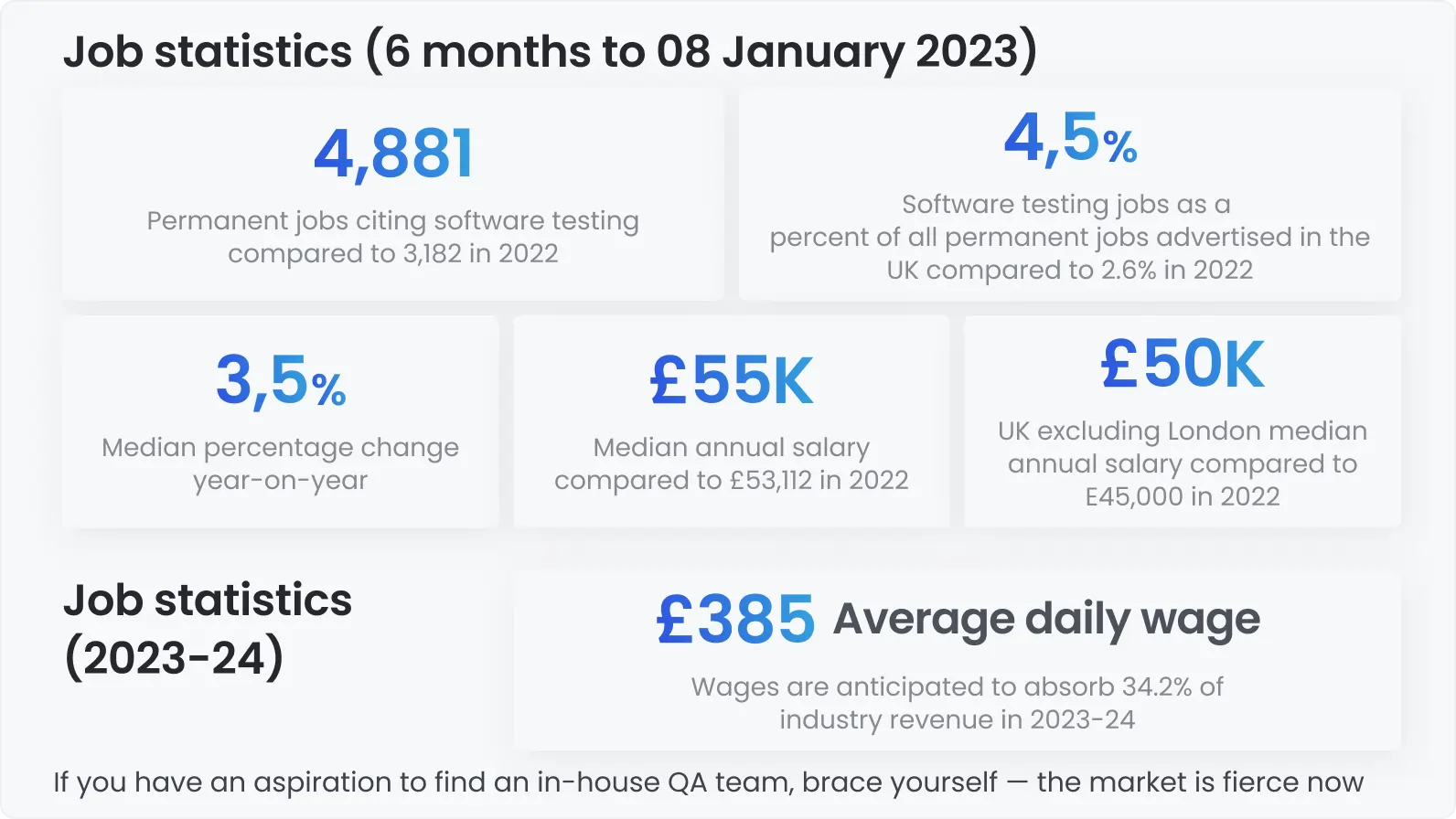
Considering the average salary of a QA engineer in the US (which is over USD 100K), with independent QA, you also gain cost savings and security. This leads to higher defect detection rates, improved product quality, and a faster time-to-market.
World Quality Report seconds that: companies believe it’s hard to recruit a skillful in-house QA team. At the same time, they think of testing as one of the most important parts of their business strategy.
Embracing specialized testing services opens the door to almost unlimited QA expertise and more quality software. If you're ready to enhance your software quality, we invite you to explore our independent testing options.
Visit our independent software testing services webpage or contact us for a free 1-hour consultation. We are ready to assess your testing needs and help you achieve your quality goals.
Team up with an award-winning software QA and testing company
Trusted by 300+ clients worldwide
About the author
Chief Executive Officer
Oleg Sadikov is the Chief Executive Officer and co-founder of DeviQA. He founded the company with a clear vision: to raise the bar for digital product quality and make QA a true business enabler, not a checkbox in the delivery process.